.jpg@webp)
Lab News
.png@webp)
We are working with industry partners on developing sensors for non-invasive monitoring of blood glucose. Our breath contains volatile organic compounds (VOCs) that can be used to predict the progression to hypoglycaemia in individuals with Type 1 Diabetes. This seminal observation led us to start discussing non-invasive breath-based glucose sensing with our industry partners at BreathAI. We are currently running a trial to see user willingness through a survey that demonstrates the use of a prototype that is designed to estimate circulating blood glucose based on our breath analysis and related sensors that are integrated in a hand-held Breath-sensing device. We are currently running a study to see user willingness through a survey that captures consumer interest. We are also working with local consumers (especially with or at risk of Type 2 Diabetes) who wish to come in to our centres in Campbelltown or in Bathurst to try out how these devices (currently in beta testing) compare to standard glucometer-based blood glucose measurement. We aim to use ML-based approaches to enhance/improve the glucose prediction algorithm, in order to test the potential of these devices in measuring changes in blood glucose of individuals with or at risk of type 2 diabetes.
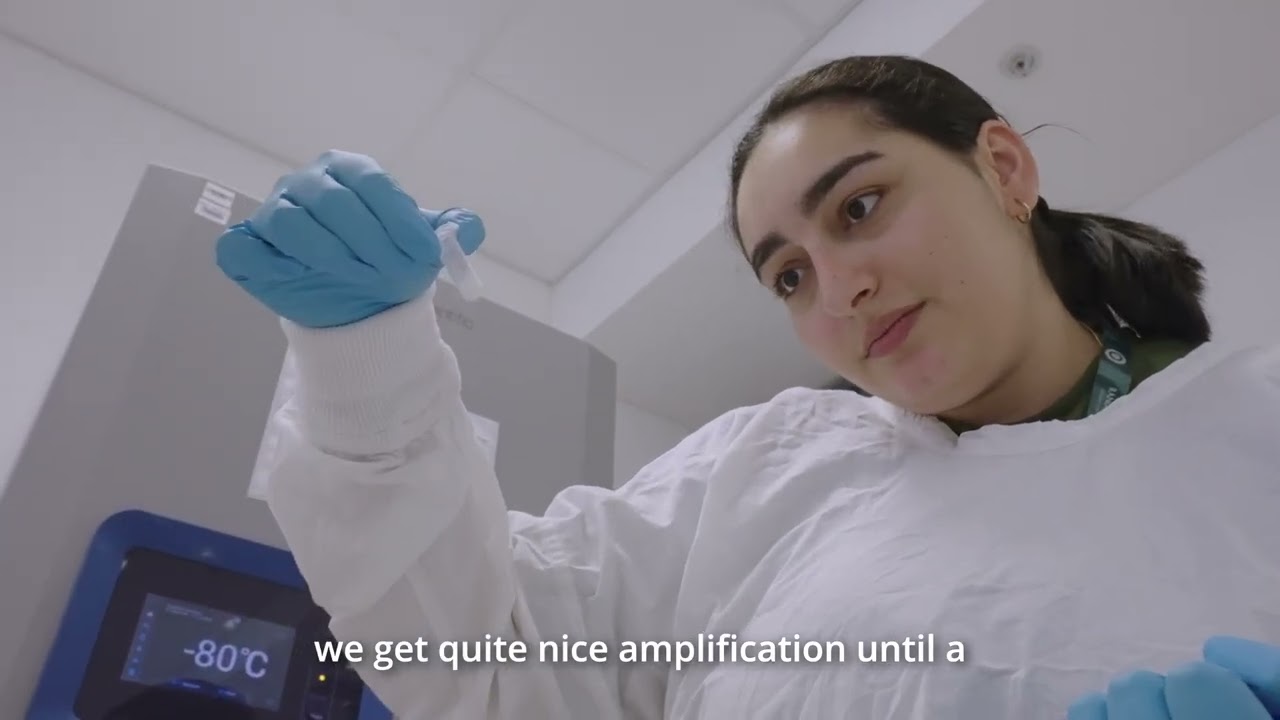
As we head into the National Diabetes Week (Jul 12 to 18, 2026), here is a short video with our industry partners at Thermo Fisher Scientific highlighting some of the work we are doing in the diabetes biomarker space.At the WesternSydneyUniversity School of Medicine, our team is working to take on some of the biomarkers that we identified and validated across diverse populations of the world to stratify diabetes risk and assess treatment responses. This is an ongoing effort that continues to grow through the contributions of our researchers and collaborating investigators across Australia and around the world.There is still much to learn, but every study brings us a step closer to improving how we identify, monitor and manage diabetes.
Grateful for all the support received (also recognising opportunities denied)! One door shut opens several other doors. Thank you to all my team (most featured in the video here), all our collaborators and study participants, to Western Sydney University, for the support and our industry partners who are helping to translate this research towards clinically compliant kits for #T1D risk stratification, #T1D vs #T2D misdiagnosis correction and predicting diabetes progression.
Tuesdays with INNODIA talk - Prof. Anand Hardikar

Our PREDICT T1D study microRNA-based risk score is now published online in Nature Medicine.

Congratulations team! Read the media release here.
Recent update on dynamic biomarkers - The Sugar Science talk - Prof. Anand Hardikar

Congratulation! Prof. Hardikar
The Lancet D&E published this one-page profile describing the journey taken by our group leader Prof. Anand Hardikar. The original article can be found on PubMed here.

Congratulation! Dr. Wong
Clinical good manufacturing practice (GMP)-based human islet isolation is a cost- and resource-intensive program wherein cadaveric human islets are made available for transplantation to treat individuals with Type 1 diabetes (T1D). The Collaborative Islet Transplant Registry (CITR) data indicate that donor characteristics alone are not good predictors of islet yield, viability, and function. There is a major unmet need to identify biomarker(s) that efficiently predict the quality of islets before initiating their isolation from the cadaveric pancreas. We recently demonstrated (Wong WKM et al JCI insight 2019) the capacity of two variants of a long-non-codingRNA (called NEAT2 a.k.a MALAT1) to predict islet quality prior to their isolation. The planned mouse studies will provide means to understand mechanisms that help enhance the stratification of donor pancreas to GMP-grade; for clinical islet transplantation , whilst redirecting the other (non-GMP grade) donor pancreas to research-grade islet isolation workflows. Congratulations Wilson on this award!!
Congratulations to Dr. Barbora Paldus ( from SVH, Melbourne), who was also awarded the 2020 ADS Lindsey Baudinet Award this year! Great to see two awards during such a tough year and grateful to the Australian Diabetes Society and the Lindsey Baudinet family for making this possible! Thank you!!

MALAT1 lncRNA expression in human islets
Our work on understanding the predictive power of MALAT1 lncRNA measurement in human pancreas is now online in JCI Insight. This study demonstrates our analysis wherein a whole transcriptome (discovery) analyses using next generation sequencing platform and machine learning workflow identified gene variants of the lncRNA MALAT1 to be highly expressed in Good quality islets. We validated these NGS data by PCR in 75 more human islet preparations. Then in a new set of 19 human pancreas samples, we show that measuring the expression levels of MALAT1 variants can predict the post-isolation islet quality. Please watch this video prepared to provide an introduction to this work.

RNA biomarkers of vascular damage
Through the NHMRC project grant scheme, we are funded to validate a panel of RNA-based biomarkers that were identified by our group to be associated with endothelial damage in diabetes. A one year Research Assistant position has been advertised. Email us for any further details or follow this link to read more about the job description.

PREDICT T1D Study video
American Diabetes Association (2018), Orlando, USA
This video provides information related to the research on validating miRNA (and insulin cfDNA) biomarkers of Type 1 diabetes in over 2000 plasma samples from individuals without, with or at risk of Typ[e 1 diabetes. The video was generated through an invitation from the American Diabetes Association (ADA TV) and generated through support from ThermoFisher Scientific. Research presented through this video has mainly been funded through the Australian Future Fellowship (2012-16) from the Australian Research Council, a pilot & Feasibility grant from JDRF Australia, The T1D Clinical Research Network Career Development Award from JDRF Australia (2016-2020) and a JDRF Australia/Helmsley Trust innovation grant (2018-21) to Prof. Hardikar.

Research presentations in Denmark
DDA meeting on noncodingRNAs in metabolic disease
Prof Hardikar was invited to present T1D biomarker research at the ncRNA metabolic diseases meeting organized by the Danish Diabetes Academy(6-8 May 2019): Novo Nordisk Foundation, Tuborg Havnevej 19, 2900 Hellerup, Denmark.
Dr. Wilson Wong also presented our recent research findings on identifying lncRNA variants that predict the quality of human islets prior to their isolation from cadaveric human pancreas.
Vijit Saini, one of our PhD students, also presented a poster on our research related to understanding the role of microRNAs that are associated with insulin gene transcription. The Hardikar Lab acknowledges the generous support from JDRF Australia Travel Grants to support Dr. Wilson Wong and Mr. Vijit Saini's travel to Denmark.